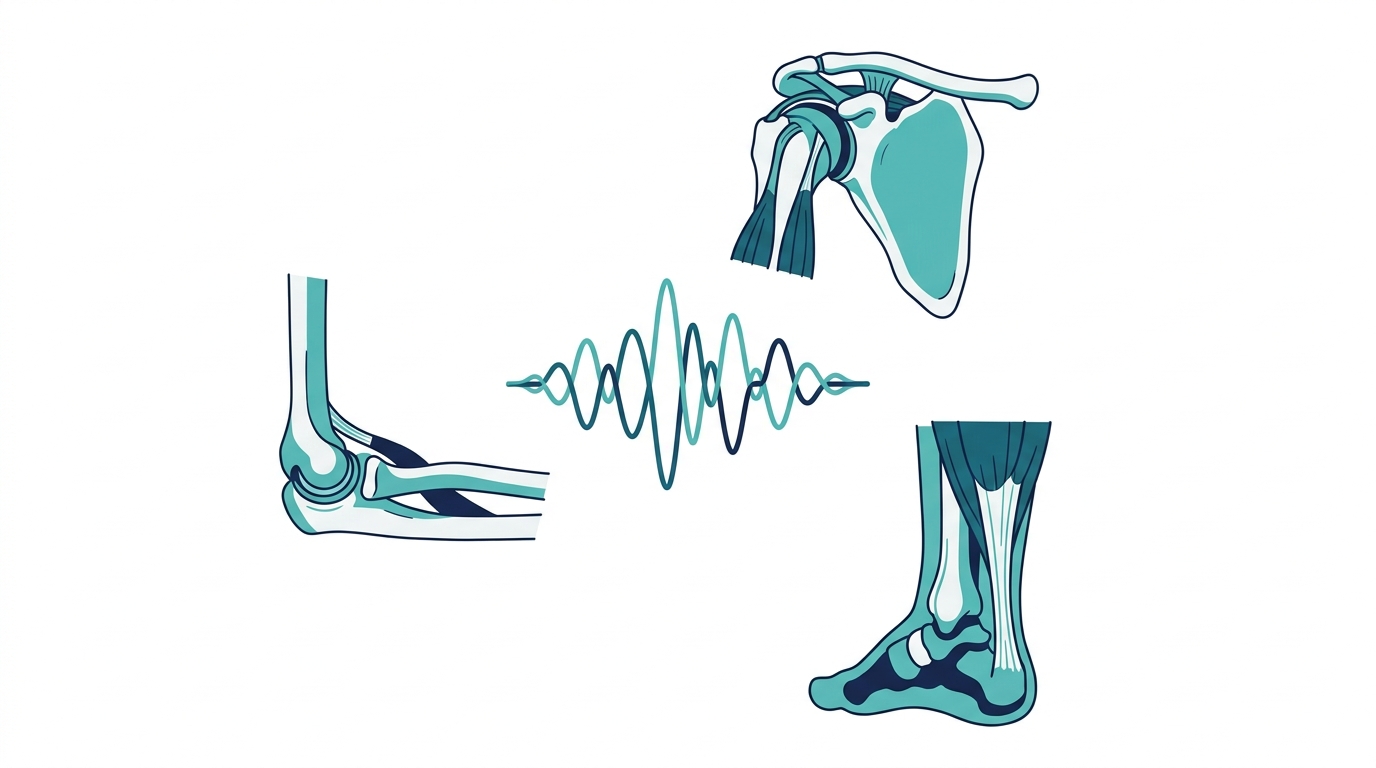
Tennis Elbow, Achilles Pain and Shoulder Tendinitis: How Shockwave Therapy Can Help
Tendinopathy is a common source of persistent pain around joints, but it is not simply a tendon that is “inflamed.” It often reflects a tendon that has been asked to handle more load than it can currently tolerate. When symptoms do not settle with basic rest or self-care, shockwave therapy for tendinitis may be considered as one part of a broader, individualized recovery plan after a proper assessment.
At Body in Motion Chiropractic, the goal is not to chase a quick fix. We look at the affected area, your movement patterns, training or work demands, medical history, and the activities that matter most to you. That helps determine whether shockwave therapy is appropriate and what other care may support a gradual return to comfortable, confident movement.
What Tendinopathy Means in Everyday Terms
Tendons are strong bands of tissue that connect muscle to bone. They help transfer force when you grip, lift, push off the ground, climb stairs, reach overhead, or play sports. Tendinopathy describes tendon-related pain and changes that can develop when repeated stress exceeds the tendon’s current capacity to recover and adapt.
Symptoms may build gradually. You might notice stiffness after rest, pain at the beginning of an activity that eases as you warm up, or soreness that lingers after work or exercise. The word “tendinitis” is commonly used, but long-lasting tendon pain is not always driven by active inflammation. That distinction matters because effective care often focuses on improving the tendon’s tolerance to load rather than relying on rest alone.
Why a Thorough Assessment Comes First
Not every pain near a tendon is tendinopathy, and not every tendon condition is a good match for shockwave treatment. At Body in Motion Chiropractic, an assessment can help identify where symptoms are coming from and whether other structures, such as a joint, nerve, muscle, bursa, or ligament, may be contributing.
Your clinician may ask about how the problem began, which movements provoke symptoms, how pain behaves during and after activity, and whether there has been a recent increase in training, work, or household demands. They may also assess strength, mobility, coordination, and movement tolerance. This information guides a plan that fits your diagnosis and goals rather than applying the same treatment to every painful tendon.
Shockwave Therapy for Stubborn Tendon Pain
Shockwave therapy uses acoustic pressure waves delivered to a targeted area. In an appropriate clinical setting, it may be considered for some persistent tendon conditions that have not responded as expected to initial conservative care. It is not a cure, and it is generally most useful when paired with an active rehabilitation strategy.
How many sessions may be recommended, what the area feels like afterward, and when you can resume or progress activity all depend on the body region, your symptoms, and your overall health. Some temporary tenderness or discomfort can occur. Body in Motion Chiropractic can explain the potential benefits, limitations, alternatives, and expected plan before treatment begins.
Tennis Elbow: When Gripping and Lifting Hurt
Tennis elbow, also called lateral elbow tendinopathy, commonly affects the tendons on the outside of the elbow. Despite its name, it can affect anyone whose work, sport, or hobbies involve repetitive gripping, twisting, lifting, typing, tool use, or wrist motion.
Pain may appear when opening jars, shaking hands, carrying a bag, using a mouse, or lifting with the palm down. Treatment often includes adjusting aggravating tasks temporarily, improving wrist and forearm strength, and gradually rebuilding tolerance for grip and lifting demands. For persistent, appropriately assessed cases, shockwave therapy may be one option within that plan. Because neck or nerve-related symptoms can sometimes resemble elbow tendon pain, accurate assessment is especially important.
Achilles Tendon Pain: A Different Load Problem
The Achilles tendon connects the calf muscles to the heel and handles substantial force with walking, running, jumping, and climbing. Achilles tendon pain may be felt in the middle portion of the tendon or closer to where it attaches to the heel. Those locations can have different contributing factors and treatment considerations.
A person with mid-portion Achilles symptoms may notice stiffness with the first few steps in the morning or soreness after running. Insertional pain near the heel may be more sensitive to shoe pressure and deep ankle bending. Exercise selection, range of motion, footwear considerations, and loading progressions should be tailored accordingly. Shockwave therapy may be considered in select cases after evaluation, but it is not appropriate for every Achilles problem.
Gradual calf strengthening is often a central part of recovery. The right starting point may range from gentle isometric holds to progressive heel raises and eventually more demanding activity. The key is matching the load to what the tendon can tolerate now, then progressing based on symptoms and function.
Shoulder Tendon Conditions Require Careful Differentiation
Shoulder pain is often more complex than it first appears. Rotator cuff tendon conditions can cause pain with reaching, lifting, sleeping on one side, or working overhead, but similar symptoms may also involve the joint, bursa, neck, or a more significant injury. For that reason, shoulder pain should not automatically be treated as a tendon issue.
Shockwave therapy may be considered for certain shoulder tendon conditions after a detailed assessment. It may not be appropriate when symptoms point to a different diagnosis or when additional medical evaluation is needed. An individualized plan may also include improving shoulder-blade control, restoring comfortable mobility, and strengthening the rotator cuff and surrounding muscles in a way that respects current pain levels.
What an Individualized Recovery Plan May Include
For most tendon problems, recovery is not about completely avoiding movement. It is about finding a manageable level of activity and building capacity over time. Body in Motion Chiropractic may combine several elements based on your presentation:
- Load management: Temporarily modifying the specific work, sport, or daily tasks that repeatedly flare symptoms while keeping you as active as possible.
- Mobility work: Addressing movement restrictions that may alter how force is distributed through the elbow, shoulder, ankle, or nearby joints.
- Progressive strengthening: Using exercises that build the tendon and surrounding muscles’ ability to handle real-life demands.
- Soft-tissue care: Using hands-on treatment when appropriate to address contributing muscle tension and support comfortable movement.
- Education and progression: Helping you understand which symptoms are acceptable during rehabilitation, when to scale back, and how to return to valued activities step by step.
Progress is rarely perfectly linear. A productive plan accounts for occasional symptom fluctuations and focuses on practical markers such as improved strength, greater confidence with movement, and better tolerance for the activities you need or enjoy.
Red Flags That Need Prompt Medical Attention
Do not assume all tendon-area pain can wait for routine care. Seek prompt medical evaluation for a sudden pop or snap followed by marked weakness; inability to push off, lift the arm, or use the limb normally; a visible deformity; rapidly increasing swelling, redness, warmth, or fever; significant numbness or tingling; severe pain after a fall or other trauma; or unexplained symptoms that are worsening rather than stabilizing.
Urgent assessment is particularly important if an Achilles injury causes a sudden loss of push-off strength or if shoulder pain follows a traumatic injury and you cannot raise the arm. These signs may require a different level of care than a routine tendinopathy plan.
FAQ
Is tendinopathy the same as tendinitis?
The terms are often used interchangeably, but persistent tendon pain is frequently better described as tendinopathy because it may involve changes in tendon capacity and structure rather than inflammation alone. A clinician can help clarify what may be contributing to your symptoms.
Does shockwave therapy cure tendinitis?
No. Shockwave therapy is not a guaranteed cure. For suitable patients, it may be one supportive option within a broader plan that addresses activity demands, strength, mobility, and movement tolerance.
Can I exercise while recovering from tendon pain?
Often, yes. The right amount and type of exercise depend on the body area and severity of symptoms. A plan usually modifies aggravating activity rather than stopping all movement, then gradually increases loading as tolerance improves.
Is every case of Achilles or shoulder pain appropriate for shockwave therapy?
No. Achilles and shoulder symptoms can arise from many different conditions. A careful assessment is necessary to determine whether shockwave therapy is appropriate or whether another treatment approach or medical referral is more suitable.
When should I schedule a consultation?
If elbow, Achilles, or shoulder symptoms have persisted, keep returning with activity, or are limiting work, exercise, or daily tasks, schedule a consultation with Body in Motion Chiropractic. We can assess your symptoms, discuss whether shockwave therapy for tendinitis may fit your situation, and develop a practical plan for moving forward safely.